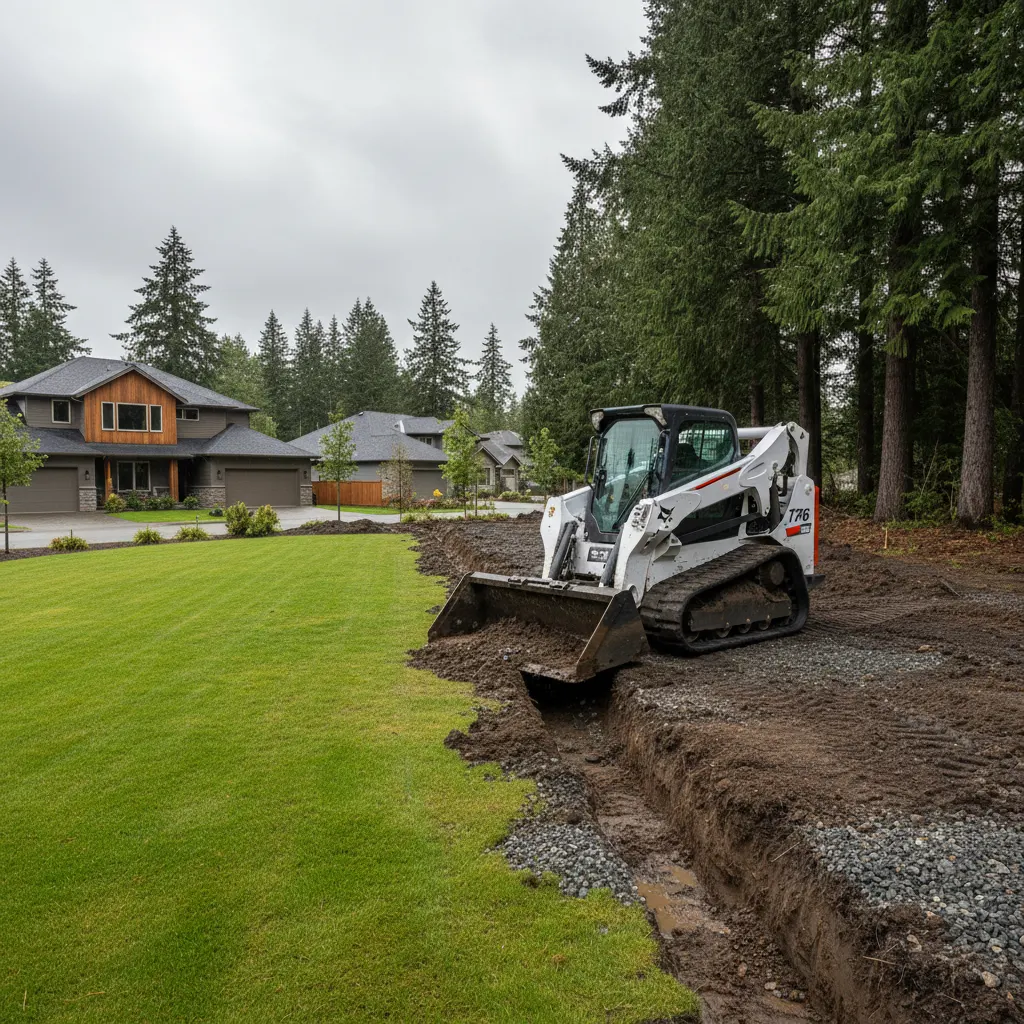
Drainage Service
Mulching in Prosser: How to Stop Water From Reaching Your Shop Pad, Shed Site, or Backyard Build Area
Before a shop pad, shed site, or backyard build area goes in, water needs somewhere to go. Here is how mulching helps control runoff and erosion around future build sites in Prosser.
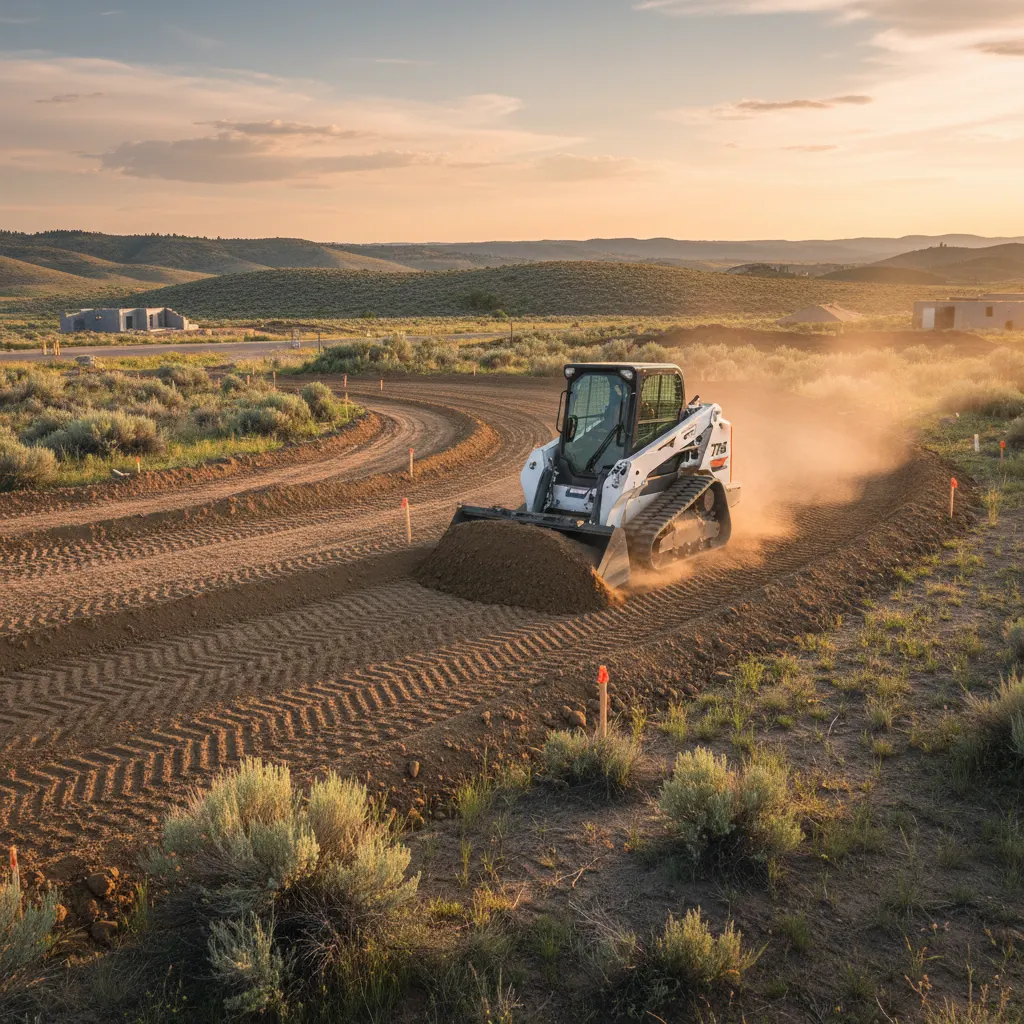
Before installing a shop pad, shed site, pool area, or other backyard improvement, property owners should understand how water moves across the lot. Mulching in Prosser can play an important role in that process by helping control surface erosion, slow runoff, and stabilize disturbed ground around future build areas. While many drainage problems start with slope, compaction, or low spots, strategic mulching often supports the overall plan by reducing sediment movement and protecting exposed soil where water would otherwise carve channels toward the project site.
Water rarely appears at a pad site without a reason. In most cases, runoff follows the easiest path downhill, collects in shallow depressions, or backs up where vegetation, debris, or compacted soil interrupt natural flow. On larger residential and small commercial properties, the problem is often made worse when land has been partially cleared but not stabilized. That is where mulching in Prosser becomes valuable: it helps cover vulnerable soil, reduce splash erosion, and support a cleaner, more controlled surface while the larger drainage picture is evaluated.
Property owners often focus on the exact footprint of the future structure, but runoff usually starts uphill or outside the planned improvement area. A shop pad may stay dry in summer and still become vulnerable during seasonal rain if nearby ground funnels water toward it. The same is true for shed sites and backyard build zones that sit below drive lanes, fence lines, or disturbed open ground. In these situations, mulching can help by slowing water across the surface and reducing the amount of loose soil that washes into low areas, creating muddy, unstable conditions.
How to identify runoff paths and drainage bottlenecks
A careful site walk is one of the best starting points. Look for rills in bare soil, sediment fans, exposed roots, washed gravel, or darker damp bands where water repeatedly travels. Low spots may show standing water, weed concentration, or soft ground long after a storm. Drainage bottlenecks often appear where runoff narrows between structures, along fence lines, beside drive approaches, or through overgrown edges. If thick vegetation is hiding the land surface, clearing it first often makes it easier to evaluate site conditions accurately.
- Walk the property after rain to see where water actually moves
- Check for shallow depressions where water lingers
- Look uphill from the build area, not just at the footprint itself
- Watch for bare or disturbed soil that can wash toward the project
- Note narrow flow points where debris or sediment may collect
Mulching is especially useful where the problem includes exposed soil and sheet flow rather than a fully engineered drainage failure. For example, if runoff is spreading across a cleared backyard and carrying sediment toward a future pad, mulch can help buffer the surface and reduce erosion while the owner finalizes the site plan. It is not a replacement for every drainage correction, but mulching in Prosser can be an effective part of the strategy when the goal is to protect soil structure and keep surface conditions from deteriorating further.
When slope problems need more than surface protection
Some properties have grade patterns that send too much water toward the intended build area for mulch alone to make a meaningful difference. If the lot has a broad slope aimed directly at the pad site, or if a depression repeatedly fills and overflows, the drainage approach may need to include reshaping how water moves. In many cases, property owners compare options such as swales, targeted grading, culvert placement, or gravel drainage routes.
Even when those measures are appropriate, mulching still has a role. Newly adjusted slopes, cleaned channels, and disturbed shoulders around drainage paths are vulnerable until the surface is protected. Applying mulch in the right locations can help reduce erosion, improve moisture moderation in exposed ground, and limit the sediment that would otherwise move into a swale or low crossing. That support function is one reason mulching in Prosser is so often considered during site preparation planning for backyard improvements.
Where mulching helps most around future pads and backyard projects
Mulching tends to be most effective on disturbed shoulders, cleared open areas above the project footprint, transition zones where runoff begins to spread, and sections of ground prone to light erosion. It can also help around access routes where repeated traffic loosens the surface and creates wash-prone edges.
Mulching works best as part of a site-specific drainage strategy. If runoff is concentrated, recurring, or tied to slope failure, the property should be evaluated before any pad or backyard improvement is installed.
Another advantage of mulching is that it can improve the condition of adjacent ground while owners finalize the layout of a shop pad, shed, or recreation area. Rather than allowing bare soil to continue breaking down through the season, a mulched surface can help preserve the site and make later work cleaner. This is especially helpful where access, visibility, and sequencing matter.
Signs you should address drainage conditions before building
- Water regularly ponds where the pad or structure is planned
- Sediment washes across the site after each storm
- The uphill area is bare, disturbed, or heavily compacted
- Existing gravel is sinking into soft or muddy ground
- Flow is concentrated through one narrow corridor toward the project
If any of these conditions are present, it is wise to evaluate drainage before the improvement is installed. Once a pad, shed, or other backyard feature is in place, correcting water movement usually becomes more disruptive and more expensive. Mulch can help stabilize conditions now, but only if it is used with a clear understanding of where the runoff starts and where it needs to go.
Choosing a practical next step for your property
No two properties shed water the same way, which is why a one-size-fits-all answer rarely works. Some sites need only surface stabilization around disturbed ground, others need runoff redirected before any pad construction should begin. The right plan depends on slope, soil exposure, traffic patterns, low areas, and how much water reaches the site during wet periods. For many owners, mulching in Prosser is a smart first or supporting step because it helps protect the ground, reduce erosion, and create more stable conditions while larger decisions are made.
If you are planning a shop pad, shed site, pool area, or backyard build zone, taking time to understand runoff now can prevent soft ground, washouts, and repeated site cleanup later. White Arrow Land Works provides mulching in Prosser for property owners who want to protect exposed soil and support better site conditions before improvements move forward. When used in the right places and at the right stage, mulching in Prosser can help keep water from undermining the area you plan to build on and support a cleaner, more durable project outcome.
Common questions
Frequently asked
Can mulching fix drainage problems around a future shop pad or shed site?
Mulching can help manage surface erosion, slow sheet flow, and protect exposed soil, but it does not solve every drainage issue by itself. If water is concentrating in a low spot or being funneled by the slope of the property, the site may also need drainage planning before construction begins.
Where should mulch be placed to help protect a backyard build area?
Mulch is often most useful on disturbed ground uphill from the project, along cleared shoulders, in erosion-prone transition zones, and around areas where runoff begins to spread across bare soil. Placement should follow actual water movement on the property rather than just the outline of the planned structure.
When should property owners in Prosser address runoff before building?
Runoff should be evaluated before installing a shop pad, shed pad, pool area, or similar backyard feature. If you already see ponding, sediment movement, muddy soil, or visible runoff channels, it is best to address those conditions early so the finished improvement is not affected later.